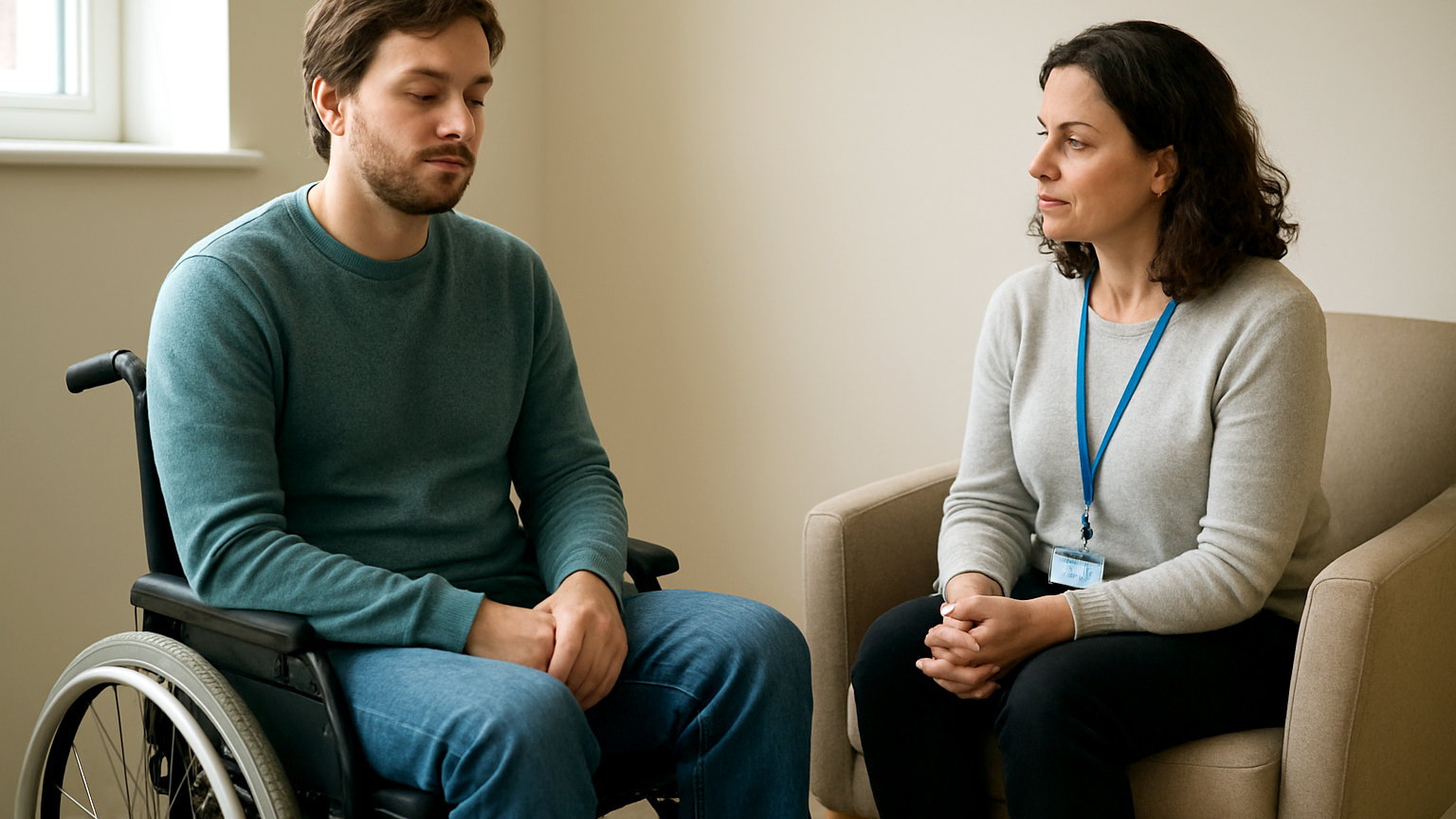
How Do You Support Someone With PTSD?
The instinct to get someone to talk about it can do harm, and the instinct to protect them from every trigger does harm more slowly.
By Mental Health Guide Editorial
20 Aug 2026

Trauma is defined by how an event was experienced rather than by how serious it looks from outside, which is why people so often dismiss their own. These guides cover what PTSD and complex PTSD involve, why symptoms sometimes appear months or years afterwards, and the trauma-focused therapies that have the strongest evidence.
The instinct to get someone to talk about it can do harm, and the instinct to protect them from every trigger does harm more slowly.
Moral injury describes the damage caused by acting against your own moral code, and it produces guilt and shame rather than fear.
Children do develop PTSD, and it looks different enough at different ages that it is regularly mistaken for behaviour problems or ordinary anxiety.
PTSD damages relationships through mechanisms that look like rejection from outside, which is why explaining them matters as much as treating them.
Symptoms returning around the date of a trauma is common, well recognised and frequently arrives before anyone has consciously registered the date.
Nightmares are among the most persistent PTSD symptoms and among the most treatable, and there is a specific therapy for them that few people are told about.
A great many people dismiss their own history because nothing dramatic happened, and cumulative or ongoing adversity produces the same effects.
PTSD has two recommended psychological treatments and a limited role for medication, and knowing that shapes what you ask for.
Trauma-focused CBT is the other treatment recommended for PTSD, and it works by helping an unprocessed memory become an ordinary one.
EMDR is recommended for PTSD in UK guidance and sounds implausible when described, which puts a lot of people off trying something that works.
Dissociation is a protective disconnection from experience, and it exists on a spectrum from ordinary daydreaming to losing hours entirely.
Avoidance is the most understandable response to trauma and the single largest obstacle to recovering from it.