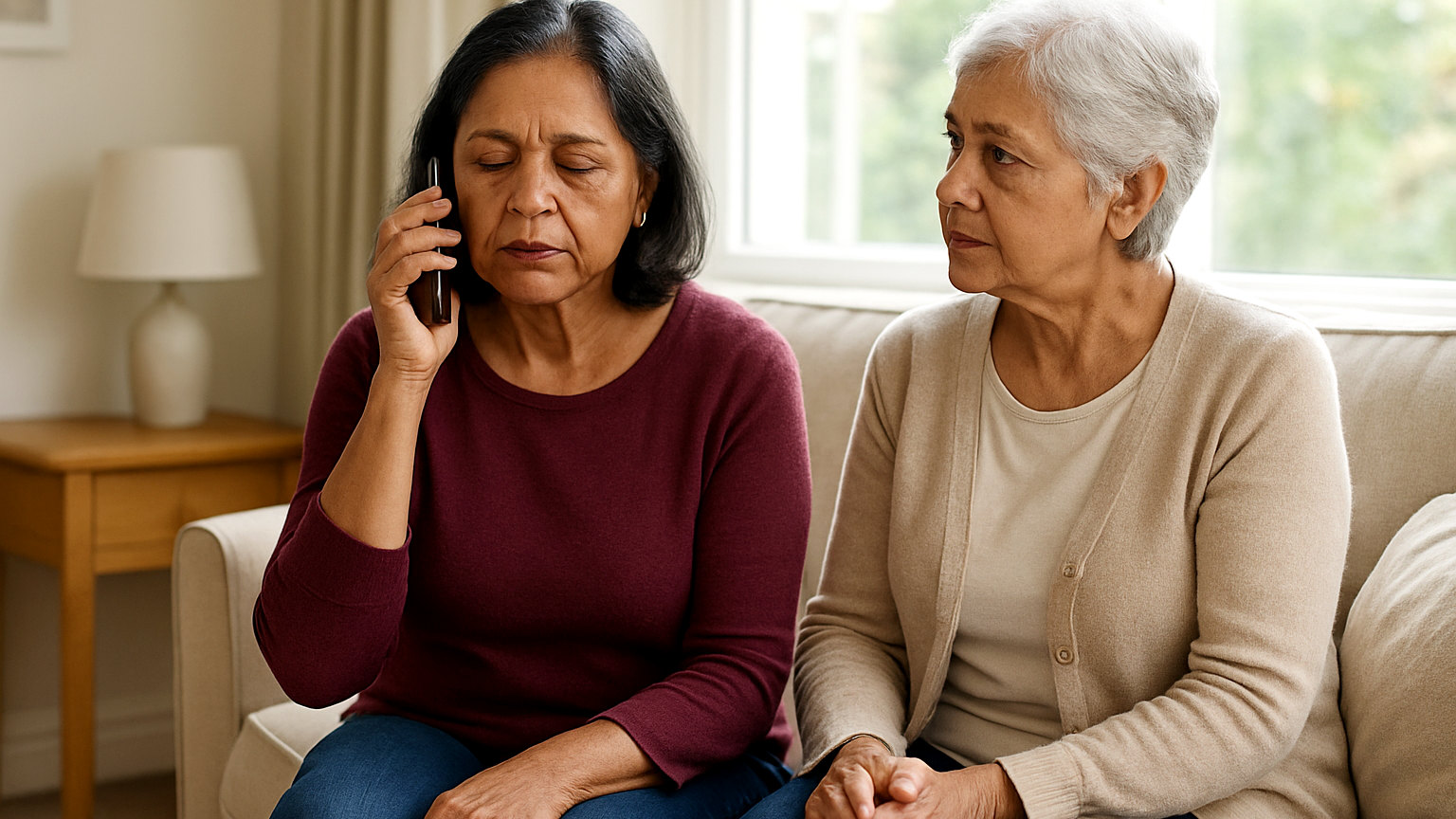
The instinct during a panic attack is to make it stop immediately, and almost everything that instinct suggests makes the attack longer. The techniques that work are quieter, slower and initially counterintuitive, because they treat the attack as a false alarm to be waited out rather than an emergency to be fought.
Breathe out longer than you breathe in
This is the single most effective thing available, and it works on physiology rather than psychology. Over-breathing lowers carbon dioxide, which produces the tingling, dizziness, air hunger and unreality. Extending the out-breath reverses it.
Breathe in through the nose for a count of four and out for a count of six or seven. Keep the breaths small rather than deep, because large gulps of air worsen the imbalance. Two or three minutes is usually enough to feel a shift.
Name what is happening
Saying to yourself that this is a panic attack, that it will peak and pass, and that it has happened before is not empty reassurance. It interrupts the interpretation that drives the escalation.
The loop runs on the belief that something catastrophic is occurring. Replacing that belief with an accurate description removes the fuel, and the surge burns out on its own schedule.
Let it happen rather than fighting it
This is the hardest instruction and the most valuable one. Resisting the attack adds effort, frustration and fear, all of which generate more adrenaline.
Allowing the sensations to be there without struggling against them shortens attacks in practice, and repeated experience of doing so gradually teaches the brain that the sensations are survivable. That learning is what eventually reduces how often attacks occur.
Ground yourself in the room
Attention during panic turns inward, monitoring every sensation. Deliberately turning it outward starves the loop.
Name five things you can see, four you can hear, three you can touch. Press your feet into the floor. Hold something cold or textured. The content does not matter. Directing attention outward is the mechanism.
Stay where you are if you safely can
Leaving brings immediate relief, which is exactly why it is such a trap. Escape teaches the brain that the situation was genuinely dangerous and that getting out was what saved you.
Repeated over months, this is how people stop going to supermarkets, meetings and motorways. If leaving is unavoidable, going back into the same situation soon afterwards prevents the association from setting.
What does not help
Breathing into a paper bag is outdated and can be genuinely dangerous if the cause turns out not to be over-breathing. Checking your pulse repeatedly increases the fear it is meant to settle.
Alcohol reduces panic in the moment and produces a rebound the following day. Reassurance from another person works briefly and then requires repeating, which is how a helpful partner accidentally becomes part of the cycle.
Building the skill in advance
Techniques rarely work first time in the middle of an attack, because the pattern they replace is well established. Five minutes of slow breathing practice on ordinary days, over a fortnight, is what makes them available when they are needed.
Treating the underlying pattern
Managing individual attacks is useful, but it does not reduce how often they arrive. Cognitive behavioural therapy for panic disorder does, and it has strong evidence behind it. It works by testing the feared catastrophes rather than avoiding them.
What to do in the hour afterwards
What happens after an attack shapes the next one. The most useful thing is to resume whatever you were doing, even briefly, rather than going straight home to recover.
This is not about toughness. Leaving immediately files the situation as one that had to be escaped, while staying for another ten minutes files it as one you got through. Eat something, drink water, and let the shakiness be there while you carry on. The aftermath is unpleasant but it is not dangerous, and treating it as ordinary is part of what eventually makes attacks less frequent.
This is general information rather than medical advice. If panic attacks are recurring, speak to a GP, and if you need to talk to someone now, Samaritans are on 116 123 at any hour.