
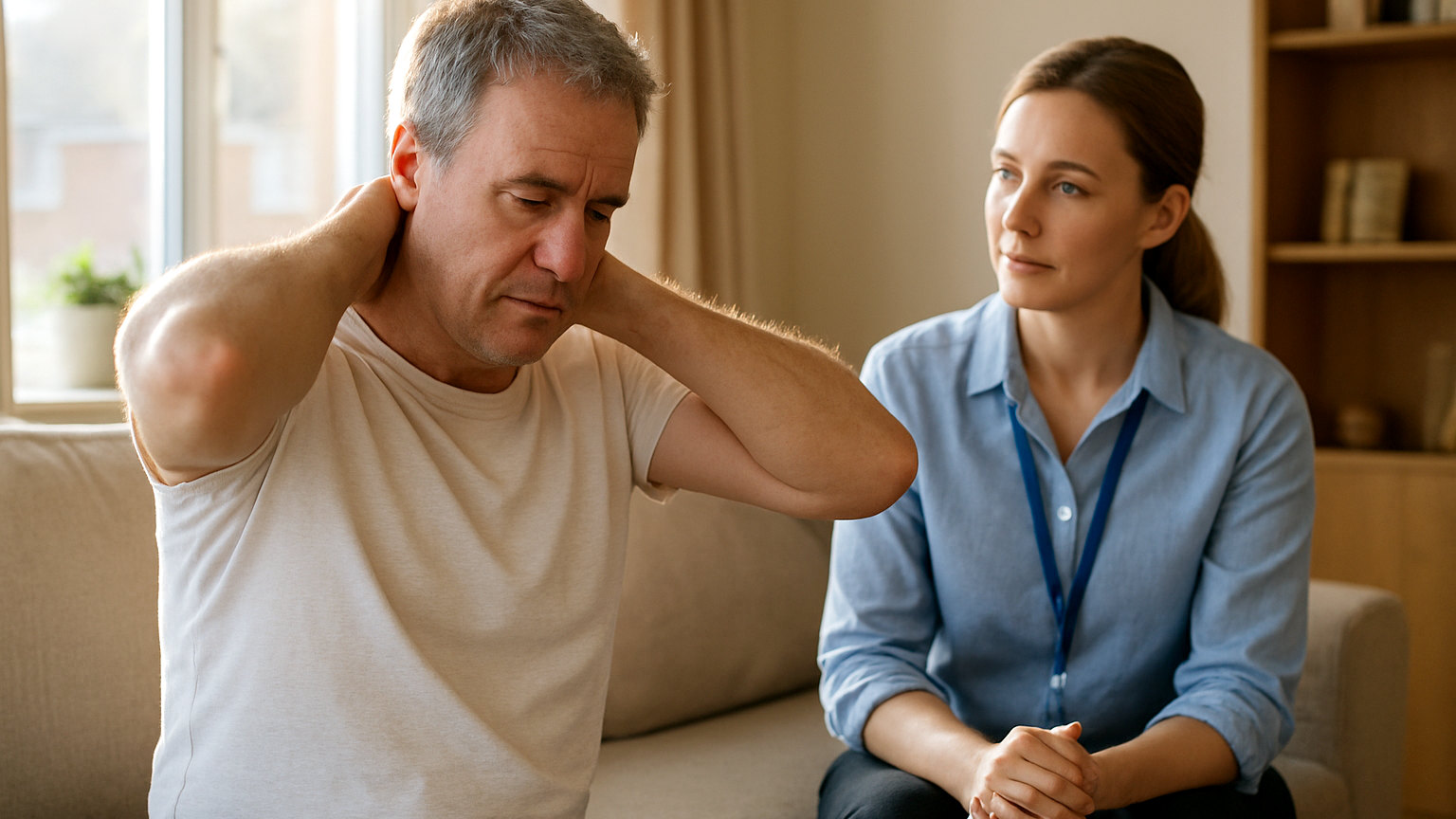
People expect anxiety to feel like agitation, so persistent exhaustion catches them off guard. Many arrive at a GP asking about tiredness rather than anxiety, and a fair number are convinced something else must be wrong, because being anxious sounds like it ought to be energising.
Running an alarm system is expensive
The threat response is designed for short bursts. Heart rate rises, muscles tense, senses sharpen, glucose is released for immediate use. All of this is metabolically costly and was never intended to run for weeks.
Sustained over time, the result is the tiredness that follows any prolonged physical effort. The body has effectively been braced for impact all month, and bracing is work even when nothing happens.
Muscle tension alone is exhausting
Holding the shoulders raised, the jaw tight and the stomach clenched for ten hours consumes real energy. Most people are unaware they are doing it until someone points it out, or until the tension turns into pain.
This is one reason anxious people often feel physically wrung out by mid-afternoon despite having done nothing strenuous.
The mental load
Anxiety occupies working memory continuously. Scanning for problems, rehearsing conversations, checking how you feel and planning for unlikely outcomes all use the same limited attentional resources needed for ordinary tasks.
This is why concentration suffers, why reading the same paragraph three times is so common, and why simple decisions feel disproportionately difficult. The capacity is being spent elsewhere.
Sleep that does not restore
Anxiety lengthens the time it takes to fall asleep and fragments the night, particularly in the early hours. Even when total hours look adequate, the sleep is lighter and less restorative.
The loop is well documented in both directions. Short or broken sleep raises next-day anxiety measurably, and higher anxiety damages the following night. This is usually the most productive place to intervene, because improving sleep improves everything downstream.
The crash after an episode
A panic attack or a period of intense anxiety is commonly followed by hours of feeling drained, heavy and tearful. This is a normal recovery phase rather than a warning of another episode, and it responds to rest, food and warmth rather than to analysis.
What else causes the same tiredness
Tiredness is not specific, and several conditions produce it alongside anxious symptoms. An underactive thyroid causes fatigue, weight change and low mood. An overactive thyroid causes palpitations, tremor and restlessness that look exactly like anxiety.
Iron deficiency anaemia produces exhaustion, breathlessness and palpitations, and is very common. Vitamin B12 or D deficiency, diabetes, sleep apnoea and depression all belong on the list. A GP can rule most of these out with a single blood test, which is worth doing rather than assuming.
What helps
Regular movement improves energy rather than depleting it, which is counterintuitive when you are exhausted. Even a twenty minute walk reduces resting tension and improves sleep quality that night.
Regular meals prevent the blood sugar dips that add to fatigue. Reducing caffeine helps more than it seems it should, since caffeine masks tiredness while worsening the sleep that would resolve it. Alcohol does the same in reverse.
Deliberate rest that is not screen time gives the nervous system a genuine break. Scrolling occupies attention without allowing recovery, which is why an hour of it leaves people no less tired.
Pacing rather than pushing
A common pattern is to do very little on the bad days and then attempt everything on a good one, which produces a crash and reinforces the sense of being unreliable. Spreading activity more evenly across the week, including on the days that feel productive, generally leaves people with more usable energy overall.
When to get it checked
See a GP for fatigue lasting more than a few weeks, fatigue with unintended weight change, fatigue that does not improve with rest, or exhaustion alongside snoring and daytime sleepiness, which may indicate sleep apnoea.
This is general information rather than medical advice. If persistent tiredness is affecting your daily life, contact your GP practice for an assessment.


