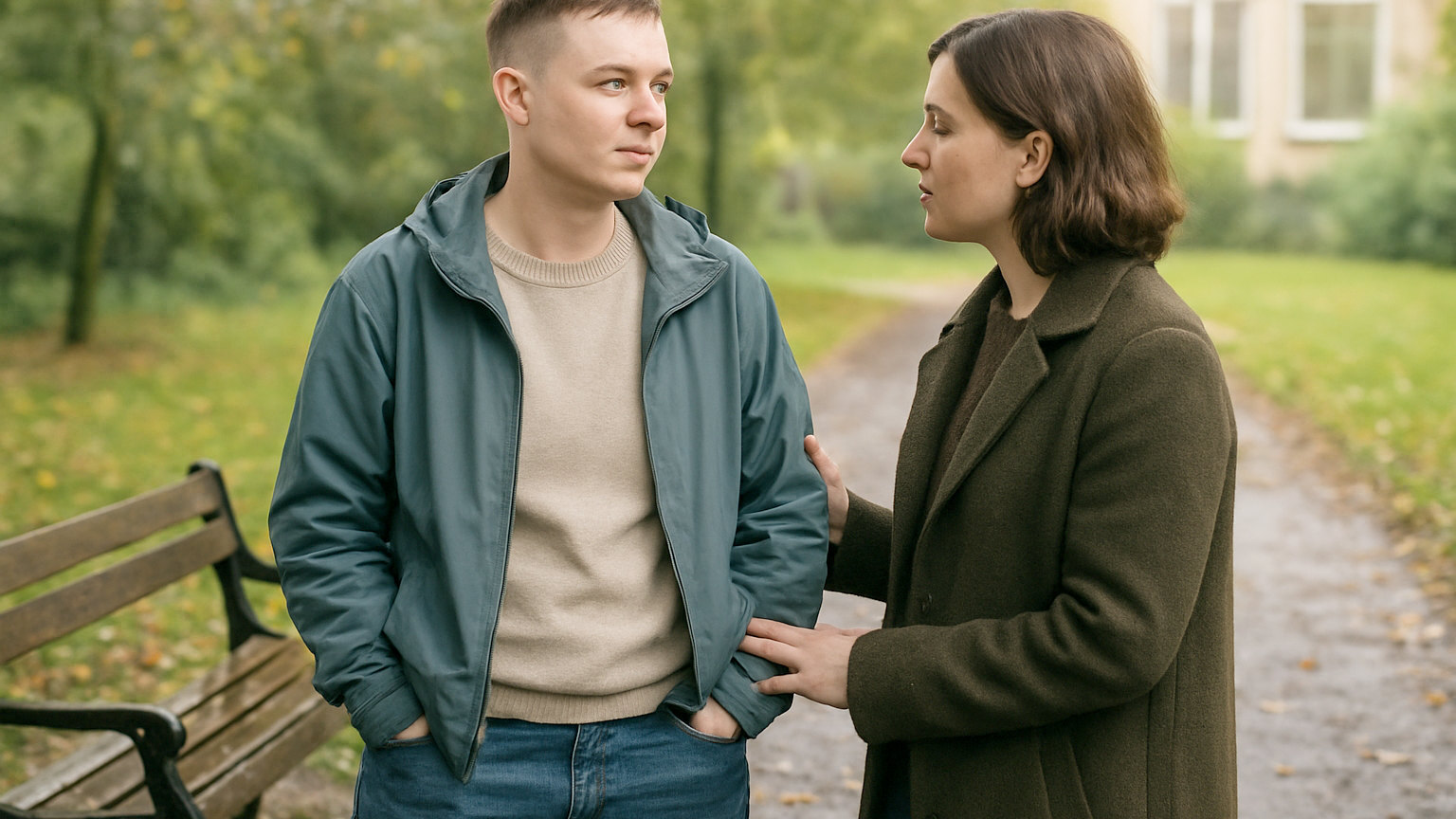
This is the question bereaved people ask most and the one with the least satisfying answer. There is no timetable, and the sense that there ought to be one is imposed from outside rather than derived from any evidence.
Why there is no answer
Grief varies enormously depending on the relationship, the circumstances, the support available and what else is happening in someone life.
Research following bereaved people finds wide variation in trajectory. Some experience intense grief that reduces steadily. Some show relatively little disruption throughout, which is more common than expected and does not indicate a lack of love. Others experience delayed or prolonged difficulty.
All of these fall within normal variation.
What tends to change
Rather than fading uniformly, grief generally changes shape.
Early on it is frequently continuous, dominating everything. Over time it becomes intermittent, arriving in waves with ordinary functioning between them.
The waves themselves may remain intense for years. What changes is their frequency and the ability to function around them.
Most people describe the loss becoming integrated into their life rather than disappearing from it.
The first year
Frequently described as the hardest, and there is a reason beyond the rawness of it.
The first year contains every occasion for the first time without the person: birthdays, Christmas, anniversaries and ordinary dates that turn out to carry weight.
Each first is anticipated as well as experienced, and the anticipation is frequently worse than the day.
Why the second year can be harder
This surprises people and is commonly reported.
The initial numbness has worn off, so the loss is felt more fully. Practical arrangements have been dealt with, removing the distraction of things that had to be done.
Support also falls away. People stop asking, on the reasonable assumption that a year is a long time, at exactly the point when the reality is settling in.
The permanence becomes real in the second year in a way it frequently is not in the first.
Where the pressure comes from
Employers offering a few days leave. Friends who stop mentioning the person. The stage model implying progress. Comments about how it has been six months now.
None of this reflects any evidence about how long grief takes. It reflects other people discomfort with sustained sadness.
Anniversaries and triggers
Grief resurfaces around anniversaries, birthdays and significant dates, frequently for years and sometimes indefinitely.
It also arrives unexpectedly: a song, a smell, seeing someone who looks similar, or reaching for the phone to tell them something.
These returns are normal and are not evidence of going backwards.
Later losses reactivate earlier ones
A new bereavement frequently brings back grief for someone who died years before, sometimes with unexpected force.
This is common and does not mean the earlier grief was unresolved.
When duration becomes clinically relevant
Prolonged grief disorder is a recognised diagnosis, applied where intense grief persists well beyond the expected period, typically at least a year in adults, and causes significant impairment.
The key features are being unable to function and feeling entirely stuck rather than the duration alone. Missing someone intensely years later is not a disorder.
Comparing yourself to others
People frequently measure their grief against someone else who appeared to recover faster, and conclude something is wrong with them.
Grief varies with the relationship, the circumstances, the support available and everything else happening at the time. Two people can lose the same person and take entirely different lengths of time, and neither is doing it incorrectly.
What returning to normal actually means
People frequently expect to return to how they were, and describe waiting for that to happen.
What generally occurs instead is a changed normal: functioning fully, enjoying things, while carrying the loss. Most bereaved people describe themselves as different afterwards rather than restored, and that is not a worse outcome.
What to say to yourself
The useful measure is not how long it has been but whether you are able to function and whether the shape of it is changing at all.
If it is not, support is worth seeking. Cruse Bereavement Support are on 0808 808 1677.
This is general information rather than medical advice.