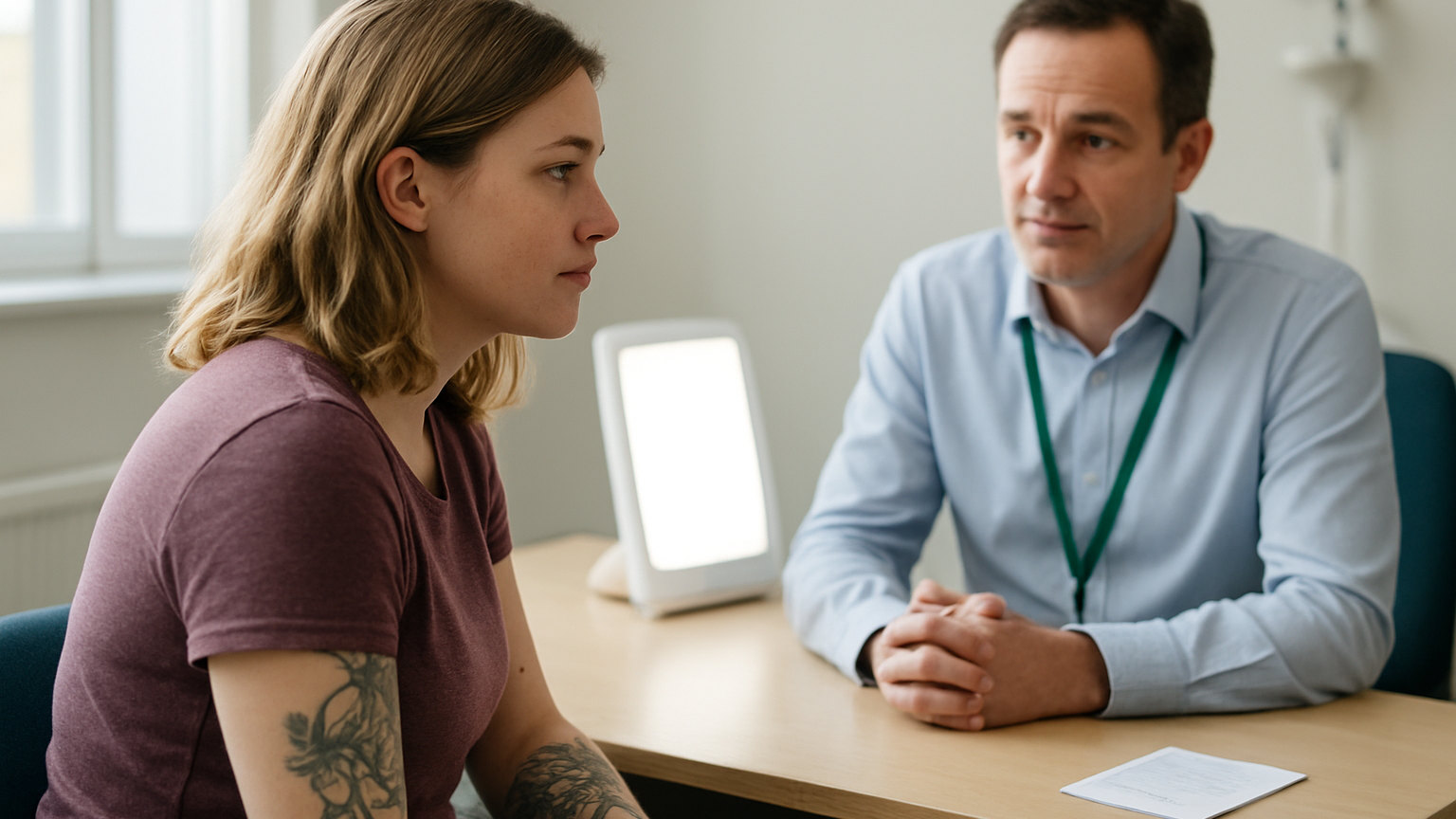
Light therapy is the treatment most associated with seasonal depression, and the evidence behind it is reasonable rather than conclusive. It is worth understanding what the research actually supports, since the marketing around light boxes considerably outpaces it.
What the evidence shows
Trials generally find bright light therapy produces meaningful improvement in seasonal depression, with a substantial proportion of people responding.
The evidence base has limitations that are worth knowing. Many trials are small, and blinding is genuinely difficult, since people can tell whether they are sitting in front of a bright light. Comparisons with a credible placebo are therefore harder than in drug trials.
UK guidance treats it as a reasonable option while noting the evidence is weaker than for established treatments such as antidepressants and CBT.
How quickly it works
Where it helps, improvement usually begins within one to two weeks, and sometimes within a few days. This is faster than antidepressants, which typically take four to six weeks.
If there has been no change after three to four weeks of consistent daily use at an adequate intensity and duration, it is probably not going to work for you, and it is worth discussing alternatives rather than persisting indefinitely.
It has to be used consistently
Benefit depends on daily use through the affected months. Symptoms typically return within days of stopping, which is why most people continue from autumn until spring.
Occasional use produces little. This is the most common reason people conclude it does not work, and adherence over months is the main practical difficulty rather than effectiveness.
How it compares with talking therapy
Research comparing light therapy with CBT adapted for seasonal depression has found broadly similar effects in the treatment winter, with an important difference afterwards.
CBT appeared to produce better outcomes in subsequent winters, presumably because it teaches something that persists, whereas light therapy needs repeating each year. That is a strong argument for considering therapy alongside or instead.
Combining treatments
Light therapy can be used alongside antidepressants or therapy, and combinations are common. There is no requirement to choose one approach.
Where symptoms are moderate or severe, light therapy alone is unlikely to be sufficient, and it should not delay other treatment.
Who should take advice first
Anyone with bipolar disorder should discuss light therapy with their clinician before starting, since bright light can trigger elevated episodes in the same way that other antidepressant treatments can.
Anyone with an eye condition, including macular degeneration, retinal disease or a history of eye surgery, should take advice from an optometrist or doctor first.
Some medicines increase sensitivity to light, including certain antibiotics, some antipsychotics, some acne treatments and St John wort. Check with a pharmacist if you take regular medication.
Side effects
These are usually mild and often settle within a week. Headache, eye strain, nausea and irritability are the most commonly reported.
Difficulty sleeping usually indicates using it too late in the day. Moving the session earlier generally resolves it.
What it will not do
It does not treat non-seasonal depression as reliably, though there is some evidence for it as an adjunct there too.
It is not a substitute for assessment. Winter fatigue caused by an underactive thyroid or anaemia will not respond to a lamp, and those are worth excluding once.
Where the marketing overstates it
Light boxes are sold with considerable confidence, and products described as mood lamps or wellness lights frequently lack the intensity used in research.
The gap between what the evidence supports and what is claimed is wide, particularly for lower-specification devices. Checking the stated intensity and the distance it is measured at is the practical protection.
The practical verdict
Worth trying for seasonal symptoms, particularly milder ones, with realistic expectations and consistent daily use. Not a reason to delay seeing a GP if symptoms are significant.
This is general information rather than medical advice. If winter symptoms affect your functioning, speak to your GP about the options.