Light boxes are sold widely and explained poorly. The specification matters, the timing matters more, and a substantial number of people who conclude light therapy does not work for them were using a device that was never going to deliver enough light.
Intensity is the main specification
The standard used in most research is 10,000 lux measured at the distance you will actually sit from it. Lower intensity devices can work with longer exposure, which most people find harder to sustain.
The critical detail is that lux figures are quoted at a specified distance, and light falls off sharply as you move away. A lamp rated at 10,000 lux at twenty centimetres may deliver a fraction of that at arm length, which is where most people actually sit.
Check the distance the rating refers to before buying, and be sceptical of any product that does not state it.
Size matters more than it appears
A larger light surface allows you to move slightly without losing the effect, which matters considerably in practice because nobody sits perfectly still for half an hour.
Very small devices require precise positioning to deliver their rated output, and people drift out of position without noticing.
Safety features to check
The device should be UV-filtered. Therapeutic effect comes from visible light, and ultraviolet adds risk to skin and eyes with no benefit.
Look for a device marketed as a medical device with appropriate UKCA or CE marking, rather than a general lifestyle lamp. Regulatory status varies, and cheaper products frequently make claims that their specification does not support.
Dawn simulators are different
These gradually brighten before your alarm, simulating sunrise, and operate at much lower intensity. There is some supporting evidence, though less than for bright light boxes.
They suit people who cannot manage a seated session, and they are not a substitute for a proper light box if symptoms are significant.
Timing is the most common mistake
Morning use is what the evidence supports, and generally within the first hour or so of waking. Morning light advances the body clock, which is the mechanism thought to matter.
Evening use pushes the clock later and commonly causes difficulty sleeping, which makes everything worse. If you can only manage one session, make it the earliest one you can.
Duration
Around thirty minutes daily at 10,000 lux is the usual starting point. Lower intensity devices require proportionally longer.
Some people find shorter sessions sufficient and others need longer. Starting at fifteen minutes and building up is reasonable if you find it uncomfortable initially.
How to position it
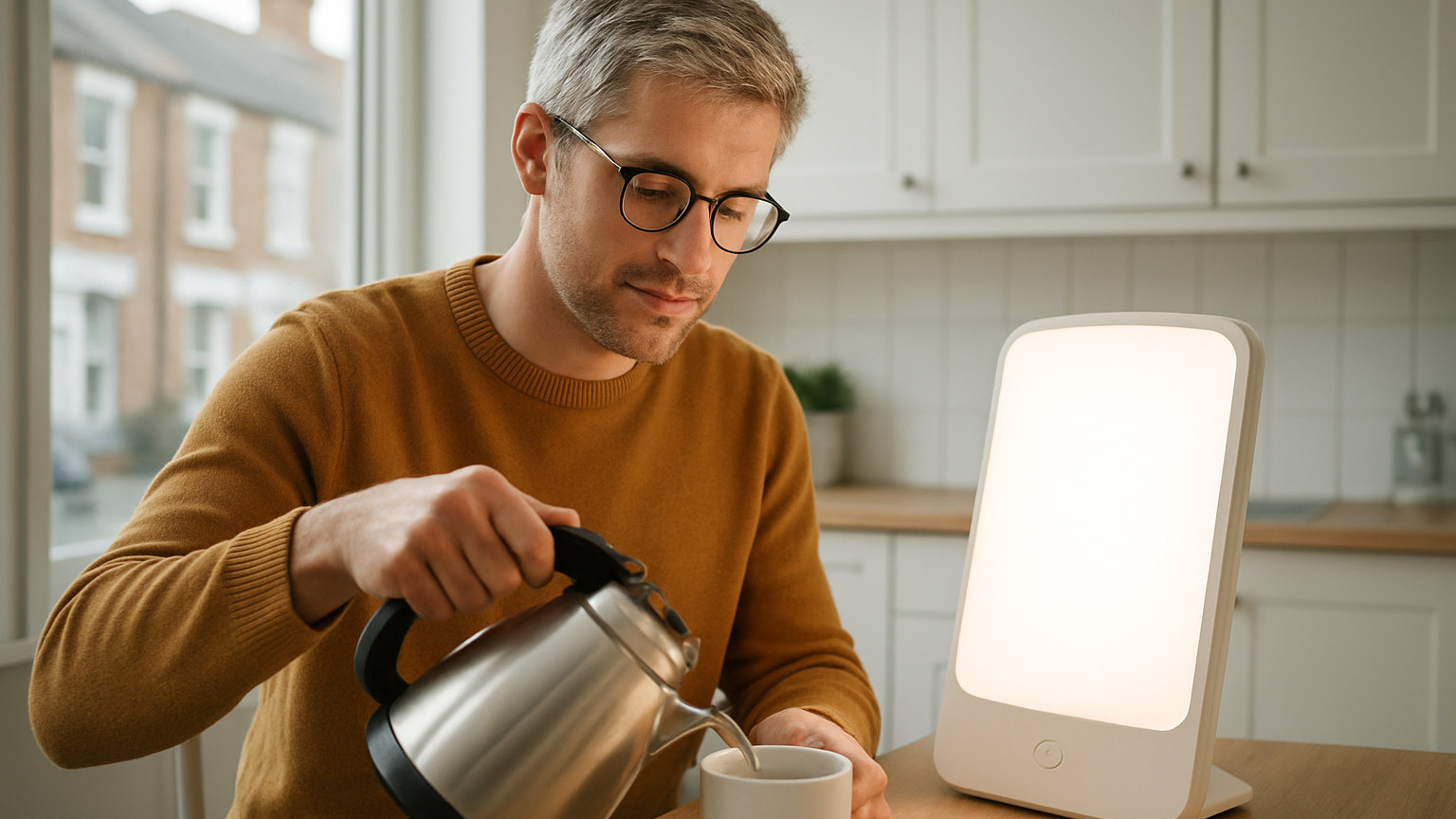
Place it slightly above eye level and off to one side, angled towards your face, at the distance stated in the instructions.
Do not stare at it. The light needs to reach your eyes indirectly, so you should be able to read, eat breakfast or work while it is on. Looking directly at a bright source is unnecessary and uncomfortable.
Making it a habit
Adherence is the main practical difficulty, since the sessions need repeating daily for months.
Attaching it to something already fixed works best: breakfast, the first coffee, checking email. Setting it up permanently rather than putting it away each day removes a step that otherwise causes people to skip it.
Who should take advice first
Speak to a clinician before starting if you have bipolar disorder, since bright light can trigger elevated episodes. Speak to an optometrist or doctor if you have any eye condition or a history of eye surgery. Check with a pharmacist if you take medication that increases light sensitivity, including some antibiotics, antipsychotics and acne treatments.
When to stop and reconsider
If there has been no change after three to four weeks of consistent correct use, it is unlikely to be the answer for you, and other treatments are worth discussing.
Persistent headaches, eye discomfort or agitation that does not settle within a week are reasons to stop and take advice.
This is general information rather than medical advice, and light boxes are not available on NHS prescription in most areas. Speak to your GP if winter symptoms affect your functioning.