Sensory processing differences are part of the diagnostic criteria for autism and are common in ADHD. They are frequently the most disabling aspect day to day and the least understood, because the environments causing difficulty appear entirely ordinary to everyone else.
Both directions
Sensitivity can be heightened or reduced, and both frequently occur in the same person across different senses.
Heightened sensitivity means ordinary input is experienced as intense or painful: fluorescent lighting, background noise, particular fabrics, strong smells, or being touched unexpectedly.
Reduced sensitivity means input is registered less, which may involve seeking additional stimulation, not noticing pain or temperature, or not registering hunger.
The senses beyond the obvious five
Interoception, the sense of internal body states, is frequently different. This affects recognising hunger, thirst, needing the toilet, tiredness and the physical signals of emotion.
This has practical consequences: eating irregularly, becoming dehydrated, not recognising illness, and difficulty identifying emotions because the bodily signals are unclear.
Proprioception and balance can also be affected, influencing coordination and spatial awareness.
Why filtering is the issue
Most people filter background input automatically, so a humming light or distant traffic disappears from awareness.
Where that filtering works differently, everything arrives at similar priority. A conversation in a cafe competes with the coffee machine, other conversations, music and passing traffic, all at once.
Managing this consciously is exhausting, and it explains why a social occasion in a busy venue can be genuinely impossible rather than merely unappealing.
Sensory overload
Where input exceeds capacity, the result may be overload: distress, inability to process speech, anxiety and an urgent need to escape.
This can lead to a meltdown, which is an involuntary response to overwhelm rather than a tantrum, or to a shutdown, involving withdrawal, going quiet and becoming unresponsive.
Neither is behaviour chosen for effect, and both are frequently followed by exhaustion and shame.
Stimming
Repetitive movements and sounds regulate sensory input and emotion. Rocking, hand movements, fidgeting, repeating phrases, listening to the same track repeatedly.
Historically it was discouraged and suppressed, which is now widely recognised as harmful. Suppressing a regulating behaviour removes a coping mechanism and increases distress.
Unless a particular stim causes injury, in which case an alternative is worth finding, there is no reason to stop it.
Adjustments that help
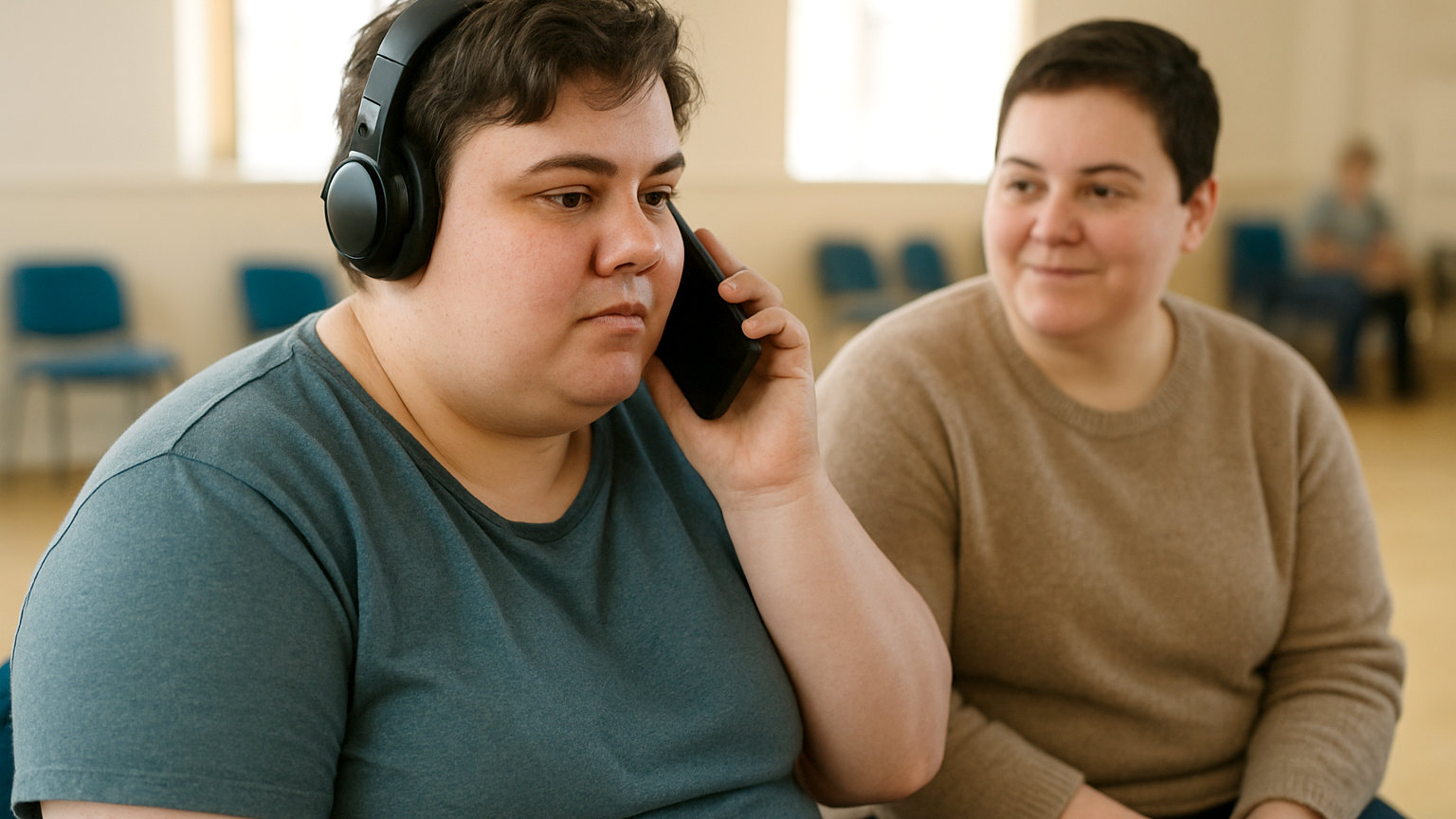
Ear defenders or noise-cancelling headphones, which are among the most effective single interventions available.
Sunglasses or tinted lenses indoors where lighting is difficult. Being able to choose seating away from noise and movement.
Advance information about environments: how loud, how busy, whether there is somewhere quiet.
Permission to leave and return without explanation, which reduces the anxiety that itself increases sensitivity.
At work
Sensory adjustments are among the most straightforward reasonable adjustments to arrange and among the least often requested.
A desk away from a walkway, adjusted lighting, permission to work in a quieter space, headphones, or the option to attend meetings remotely all cost little and change a great deal.
Planning around it
Recovery time after unavoidable sensory demand is not optional. Building it into a day, rather than treating it as spare time, prevents accumulation.
Many people find that scheduling one demanding environment per day rather than several is the difference between managing and burning out.
Sensory needs change with load
Tolerance is not fixed. The same environment may be manageable on a good day and impossible at the end of a demanding week.
This inconsistency is frequently misread as the difficulty not being genuine. It reflects capacity being depleted rather than sensitivity being variable, which is why protecting recovery time affects sensory tolerance directly.
For families
Believe the account. Something described as painful is painful, even where it seems unremarkable to you.
Adjust the environment rather than expecting tolerance to build, since forced exposure generally increases distress rather than reducing sensitivity.
This is general information rather than medical advice. The National Autistic Society helpline is on 0808 800 4104.